


At the recent ANGIODYNAMICS INTERNATIONAL LIFE SYMPOSIUM, Dr. Niu Lizhi, President of Guangzhou Fuda Cancer Hospital, traveled to Europe to present to leading experts worldwide the current status of NanoKnife ablation technology in China, as well as China’s clinical experience and outcomes using NanoKnife combined with chemotherapy in treating hilar cholangiocarcinoma. This breakthrough therapy drew strong interest from international participants, prompting an enthusiastic Q&A session.

Hilar cholangiocarcinoma is notoriously difficult to treat due to its complex anatomical location. Tumors often invade major vascular structures, and most patients lose the opportunity for curative surgery by the time of diagnosis. For those with advanced, unresectable disease, traditional treatment options remain limited, and a breakthrough therapy is urgently needed. NanoKnife ablation has emerged as one such breakthrough in addressing this global clinical challenge.
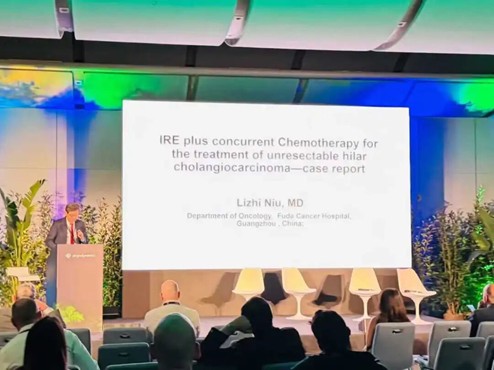
The NanoKnife, also known as Irreversible Electroporation (IRE), is a non-thermal tumor ablation technique. It delivers microsecond high-voltage electrical pulses that create nanoscale pores in cancer cell membranes, inducing apoptosis while preserving nearby vital structures such as blood vessels, nerves, and bile ducts. This makes it particularly suitable for tumors located in anatomically complex regions such as the hepatic hilum, gallbladder and bile ducts, and pancreas.
As one of the earliest hospitals in China to adopt NanoKnife technology, Guangzhou Fuda Cancer Hospital has successfully performed thousands of NanoKnife ablation procedures, ranking among the world’s leading centers. The hospital has also developed a comprehensive treatment system and clinical pathway, enabling the Chinese team to accumulate extensive experience and offer new hope to patients with unresectable hilar cholangiocarcinoma. During the conference, Dr. Niu presented clinical data demonstrating outcomes significantly superior to traditional monotherapies, attracting wide attention from attendees.


NanoKnife is not a stand-alone treatment but a key component of a multidisciplinary approach. The integration of local ablation and systemic therapy is expected to become an important trend in the future management of hilar cholangiocarcinoma. With continuous advancements in China’s medical technology and deepening international collaboration, more innovative Chinese treatment approaches are stepping onto the global stage. Guangzhou Fuda Cancer Hospital will continue to contribute China’s wisdom and strength to the worldwide fight against cancer.