“If this chemotherapy continues, it will make a healthy person sick…”
These were the words of Ms. Zhou’s younger brother. He had been accompanying his sister in her fight against cancer, traveling from place to place in search of treatment. After chemotherapy, he watched her lose all her hair and become almost unrecognizable from the suffering. He was heartbroken—and desperate.
“We can’t go on like this.”
Stage III Tongue Cancer: Chemotherapy Took a Toll
Ms. Zhou is from Hong Kong, China. At the end of 2024, she noticed a lump on the left side of her neck. Soon after, symptoms such as headaches and loss of appetite followed one after another.
By the time she was diagnosed at the hospital, it was already stage III tongue cancer, with lymph node metastasis, and the tumor was growing rapidly.
At that moment, both Ms. Zhou and her brother were overwhelmed.
They had no experience with cancer—and certainly never wanted to have any. Following the advice of local doctors, she began chemotherapy and radiotherapy. But after just one round of chemotherapy, it was as if she had become a different person.
Her hair fell out, and her body became extremely weak. Later, she tried other medications, like gambling on a slim chance of hope. But luck was not on her side—the drugs showed no effect, while her body continued to deteriorate.
Looking Beyond: A Turning Point
Watching his sister suffer felt like a constant weight on her brother’s heart. He sought help everywhere—praying, asking around—hoping to ease her pain.
But after exhausting options in Hong Kong, he realized that conventional treatments seemed to have reached their limit.
Finally, a friend who practiced natural therapy told him:
“Don’t just focus on Hong Kong. Look further—there may be other options outside.”
The friend recommended a specialized cancer hospital: Fuda Cancer Hospital in Guangzhou. After researching extensively and contacting the hospital staff, he decided to give it a try.
In April 2025, he brought his sister to Guangzhou, where she was admitted to the Third Medical Department of Fuda.
Upon arrival, he noticed something striking—patients here came from many different countries and regions.
“So many people are willing to travel this far for treatment—there must be a reason,” he thought.
The Same Chemotherapy—A World of Difference
At admission, Ms. Zhou had enlarged lymph nodes on both sides of her neck. The one on the left was particularly prominent—about 5 cm in size—with ulceration on the surface and yellow fluid discharge. She looked extremely frail.
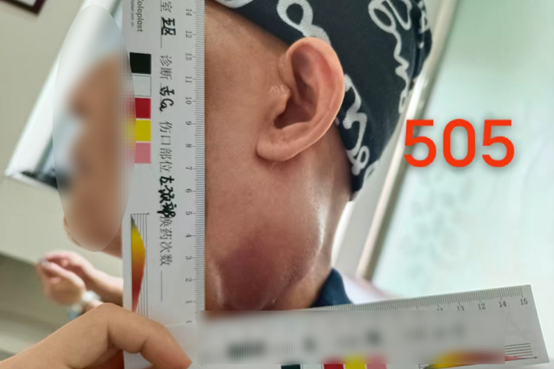
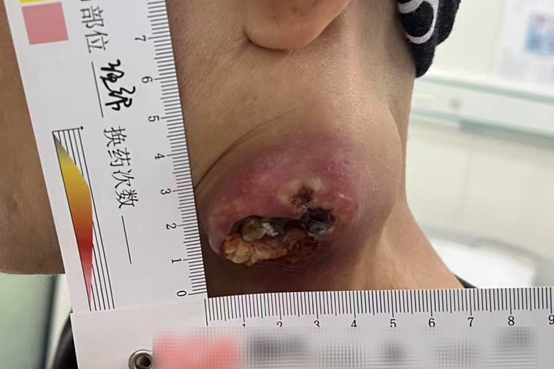
The hospital quickly organized a multidisciplinary team (MDT) consultation. After discussion, the experts decided to proceed with interventional chemotherapy.
“The side effects were completely different,” the siblings said, describing their first impression.
Before coming, they had already learned that interventional therapy does not rely on systemic drug delivery. Instead, a very thin catheter is precisely guided into the artery supplying the tumor, allowing chemotherapy drugs to be delivered directly to the tumor—“poisoning” it—while simultaneously blocking its blood supply to “starve” it.
However, the tumor did not shrink as quickly as expected. After several sessions of interventional therapy combined with targeted therapy and immunotherapy, the tumor stopped growing, but the reduction was not very obvious.
To further reduce the tumor burden, doctors recommended iodine-125 seed implantation—a procedure that places radioactive seeds directly inside the tumor to eliminate cancer cells from within. This was followed by targeted therapy.
One month later, follow-up examination showed significant tumor shrinkage, achieving PR (Partial Response).
Subsequent follow-ups were gradually extended from once a month to once every two months—and each time, the results kept improving.
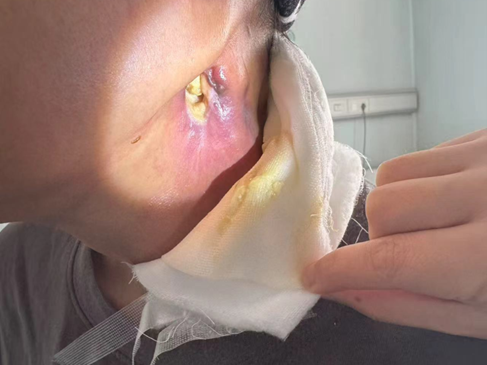
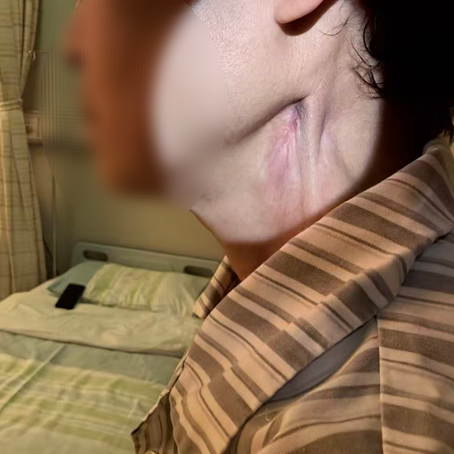
“I No Longer See Her as a Patient”
Looking back on the past year, her brother said it had been exhausting.
Not physically—but emotionally. Watching his sister suffer made him suffer as well.
What touched him most was the understanding shown by the medical staff at Fuda.
“They truly understand the feelings of cancer patients and their families. They don’t just treat the disease—they care for the heart as well,” he said.
“Being sick is already hard enough. If you’re treated coldly on top of that, it’s unbearable.”
Today, Ms. Zhou’s life has largely returned to normal. Apart from continuing targeted therapy and experiencing occasional mild side effects, she is able to live much like a healthy person.
Her brother said with a smile:
“I no longer see her as a patient—she’s 80–90% recovered.”