Since his teenage years, Ibrey (pseudonym) had suffered from rhinitis and polyps. Because of this, when his stuffy and runny nose returned in 2023, he didn’t think much of it, assuming it was just his old ailment acting up. However, the diagnosis report read neither inflammation nor polyps, but cancer.
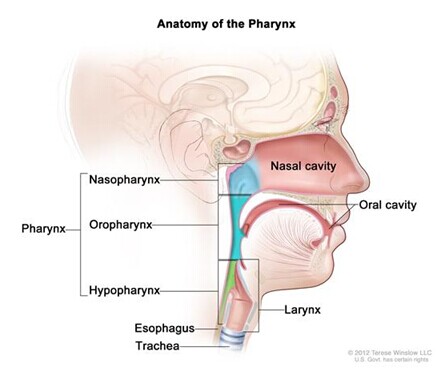
Ibrey, 53, comes from Kazakhstan. Three years ago, he underwent a corrective surgery for a deviated right nasal septum, during which the doctor smoothly removed a mass in his nasal cavity. Sensing something unusual, the doctor sent the excised tissue for a pathological examination. The result came like a thunderbolt: intestinal-type adenocarcinoma. Later, a consultation on the pathological specimen further confirmed: sinonasal adenocarcinoma, intestinal type, diagnosed as carcinoma of the right nasal mucosa, Stage I (T1N0M0).
Malignant tumors of the nasal cavity and paranasal sinuses are not uncommon clinically. In the field of otolaryngology-head and neck surgery, they rank third, behind only nasopharyngeal carcinoma and laryngeal carcinoma. In the early stages, they present only as unilateral nasal obstruction, mucoid discharge, or occasional blood in the phlegm, which can easily be mistaken for chronic rhinitis or sinusitis. As a result, 70% of patients are already at a locally advanced stage when diagnosed. Depending on the pathological type, primary site, extent of invasion, and the patient's general condition, comprehensive treatment measures including surgery, radiotherapy, chemotherapy, and immunotherapy are generally adopted.
He underwent 33 sessions of radiotherapy, which only bought him six months to a year of peace, as a follow-up examination indicated a tumor recurrence. Consequently, the local hospital changed the plan to intravenous chemotherapy. However, the process of intravenous chemotherapy was truly agonizing. Ibrey experienced side effects such as loss of appetite and sudden weight loss. At one point, he had to suspend the treatment because he could not tolerate it, and his fluctuating condition continuously drained his hope.
Starting in January this year, Ibrey's nasal obstruction worsened, with more and more discharge leaking from his right nasal cavity. He had to put a towel on his pillow when sleeping just to keep the mucus from soaking it. At the same time, his eyes, ears, and head experienced varying degrees of swelling and pain. He realized that relying solely on intravenous chemotherapy might not work, and he needed to look for other medical assistance.
"Go to China, to Guangzhou Fuda Cancer Hospital, and try the minimally invasive technology there." A fellow cancer patient, who had previously received treatment at Fuda and regained his vitality, recommended this hospital to him. The peer also mentioned President Niu Lizhi's international reputation in the field of cryoablation, as well as the interventional chemotherapy technology that is completely different from traditional intravenous chemotherapy. Those words, like a beam of light, pierced through the gloom that had overshadowed him for days.
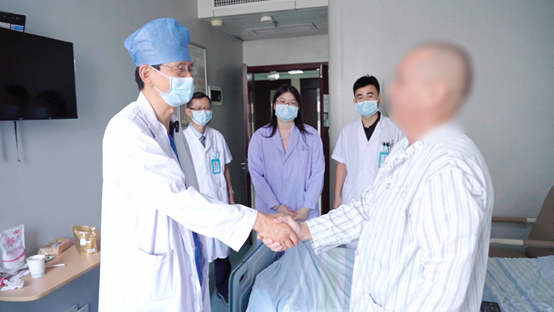
In February 2026, Ibrey set foot on Chinese soil and came to the Third Medical Department of Fuda. By this time, his diagnosis was recurrence after surgery for a malignant nasal cavity tumor, Stage IVA (cT4aN0M0). Considering that the tumor was large and could not be completely removed by surgery, the medical team tailored a treatment plan for him after a comprehensive evaluation. He underwent the "wished-for" nasal tumor perfusion chemotherapy + embolization. This involved precisely perfusing the drugs into the core location of the tumor, and then injecting an embolic agent to "block" the blood-supplying vessels. This cut off the tumor's nutrient supply, causing it to collapse under a "precision strike" and "starvation siege." This strategy not only enhanced local drug efficacy but also protected the surrounding healthy tissues as much as possible, thereby significantly reducing toxic side effects.
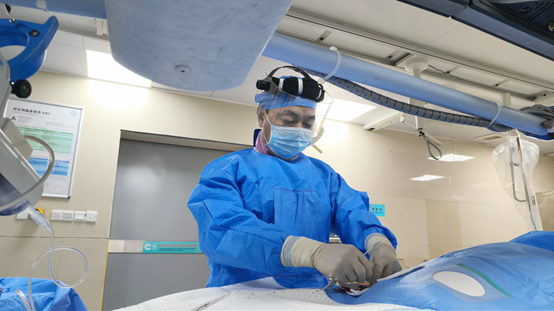
During this period, Ibrey also received immunotherapy. In the beginning, he had some mild side effects from the interventional therapy, but the medical and nursing team promptly provided supportive care, such as antiemetic, stomach-protecting, and liver-protecting treatments. After the second course of treatment, he was surprised to find that his breathing was much smoother, and his runny nose was significantly reduced. Even after being discharged from the hospital, he no longer needed a towel on his pillow at night.
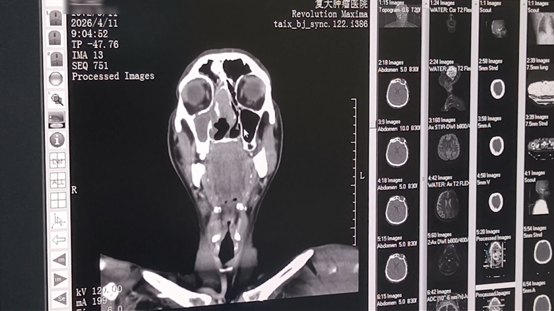
The treatment progressed steadily according to plan. As the tumor shrank and the tumor burden gradually lightened, the condition assessment reached PR (Partial Response). The team from the Third Medical Department formulated a local treatment plan for Ibrey: cryoablation for the nasal tumor. This technique uses ultra-low temperatures to physically destroy cancer cells, causing minimal trauma and allowing quick recovery, making it particularly suitable for patients who cannot or are unwilling to undergo surgery. Studies have also shown that cryoablation can release tumor antigens and activate the body's own anti-tumor immune response. This perfectly forms a "dual-sword combination" with immunotherapy, which is expected to enhance systemic efficacy and inhibit recurrence and metastasis.
With several subsequent sessions of interventional therapy combined with immunotherapy, Ibrey's condition got better and better, and the tumor was much smaller than when he was first admitted. He lamented that if he had come to Fuda at the very beginning of his diagnosis, he might have had a chance to be cured.
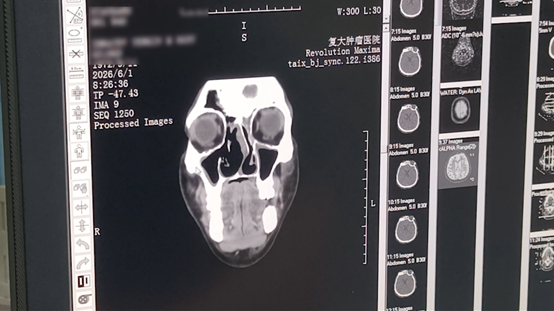
But he didn't complain, only felt grateful. He thanked Fuda and every physician and friend who had extended a helping hand. On this foreign soil, he has finally regained his freedom of breathing and the hope of life.