


From May 15 to 17, 2026, the inaugural academic conference of the World Ablative Therapies Association (WATA 2026) was held in Beijing, China.
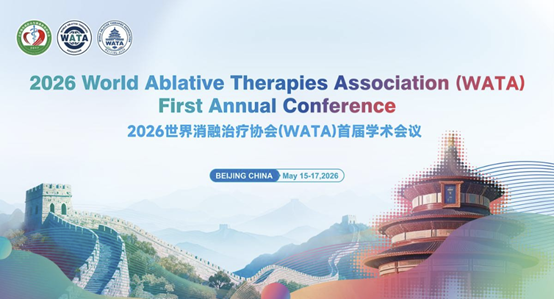
As WATA’s first global academic event, the conference was themed “United in Ablation Worldwide: Building Consensus, Advancing Evidence, Pursuing Excellence.” Leading experts and scholars from more than 30 countries and regions gathered to discuss clinical topics, technological innovation, and discipline development in tumor ablation, while exploring the latest advancements and future directions of ablation therapy.
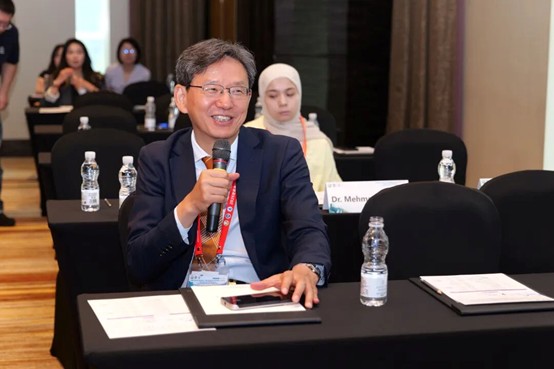
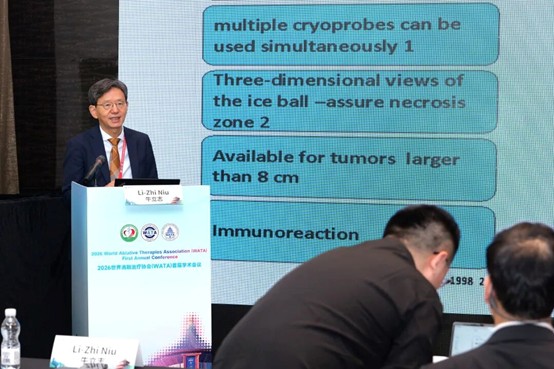
On May 15, the pre-conference international training courses officially kicked off, focusing on key topics including lung tumor ablation, thyroid tumor ablation, irreversible electroporation (NanoKnife), and liver tumor ablation. Guangzhou Fuda Cancer Hospital President Niu Lizhi was invited to attend and delivered two keynote presentations: Standardization and Techniques of Cryoablation for Liver Cancer and Clinical Application of NanoKnife for Liver and Pancreatic Tumors Under Combined Ultrasound and CT Guidance.
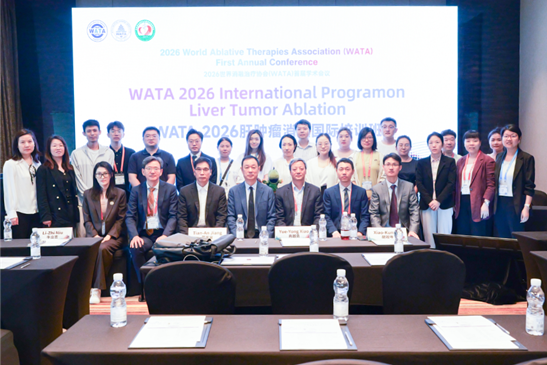
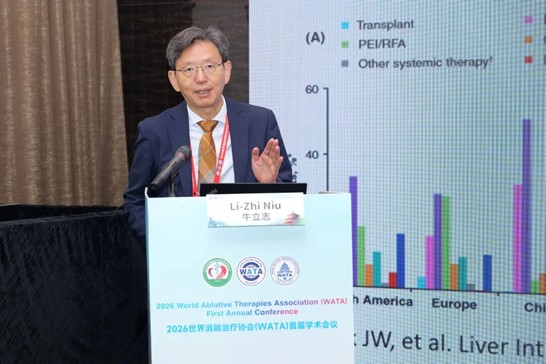
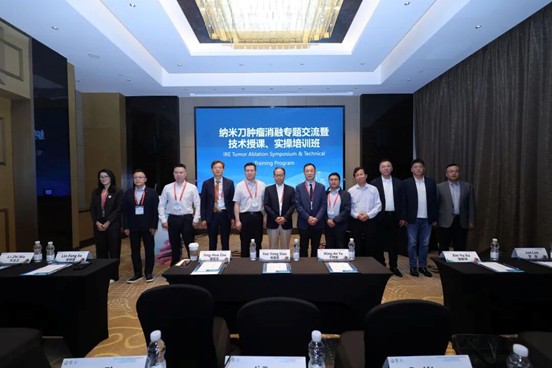
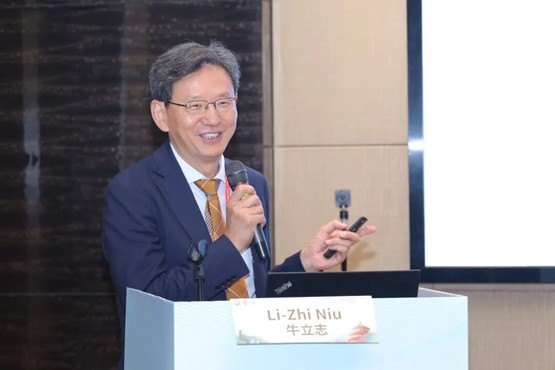
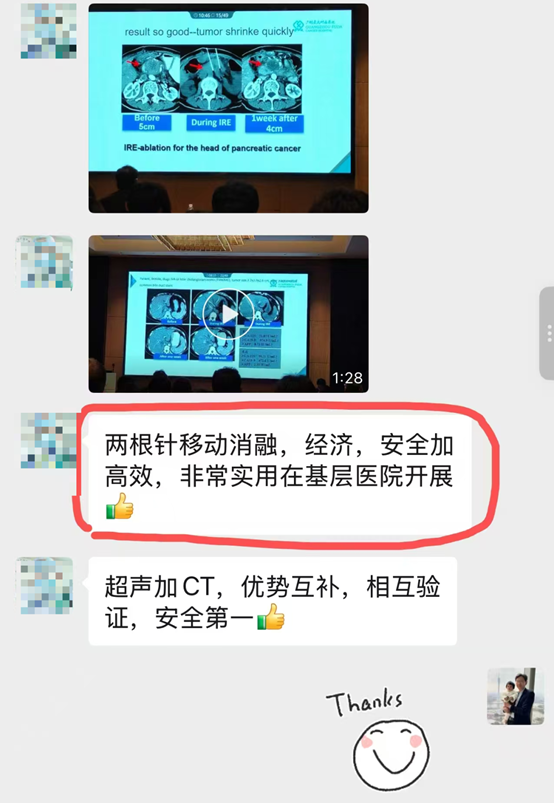
During the training sessions, President Niu shared extensive clinical experience through numerous classic cases, explaining both the technical essentials and clinical challenges of various ablation procedures in a clear and practical manner. Particularly noteworthy was the internationally pioneered “two-needle technique” for NanoKnife ablation developed by Fuda, which received high praise from attending experts and scholars for its cost-effectiveness, safety, and efficiency.
At the Breast and Gynecologic Ablation Session, Ma Yangyang delivered a special presentation titled Cryoablation for Breast Cancer. He noted that compared with traditional open surgery, cryoablation offers several advantages, including minimal trauma, faster recovery, repeatability, real-time imaging guidance, and better cosmetic preservation of the breast.
For carefully selected patients with early-stage breast cancer, as well as those with recurrent or metastatic disease or patients unable to tolerate surgery, cryoablation can serve as an important complementary approach for local tumor control and multidisciplinary treatment.
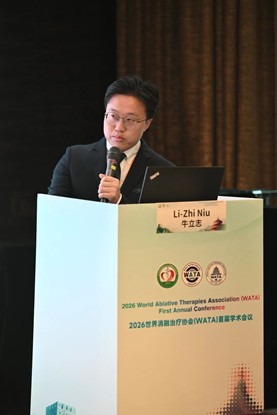
Importantly, cryoablation is not only a local treatment modality but may also activate anti-tumor immune responses through mechanisms such as tumor antigen release, immunogenic cell death, and modulation of the tumor microenvironment. As a result, the combination of cryoablation with systemic therapies — including immunotherapy, targeted therapy, endocrine therapy, and chemotherapy — is emerging as a promising direction in comprehensive breast cancer treatment. In his presentation, Director Ma also highlighted the value of cryoablation in local tumor control, symptom relief, synergistic multidisciplinary treatment, and potential immune activation based on recent research findings and clinical experience.
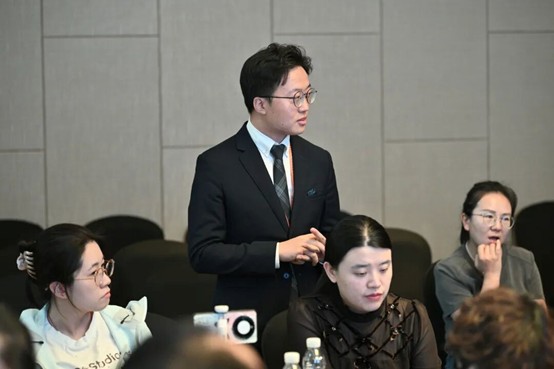
As a global academic organization initiated by Chinese physicians, WATA 2026 brought together leading ablation experts from around the world in Beijing, creating a high-level international platform for academic exchange and collaboration. Experts shared their practical experience and unique insights, and the cross-border exchange of ideas greatly benefited all participants.
Notably, the conference also officially designated May 16 as “World Ablation Day” for the first time, marking a new milestone in the global development of ablation therapy in the fight against cancer.
Guangzhou Fuda Cancer Hospital has long been dedicated to the field of minimally invasive cancer therapy. By actively participating in this international conference and sharing China’s experience in tumor ablation, the hospital once again demonstrated its professional expertise and commitment in the field of ablation therapy.
Taking this conference and the newly established “World Ablation Day” as a new starting point, the hospital will continue to strengthen international collaboration, integrate global expertise, and work together with peers worldwide to promote the future development of minimally invasive ablation therapy toward greater precision, standardization, and innovation.