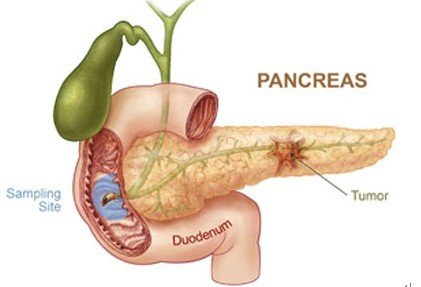
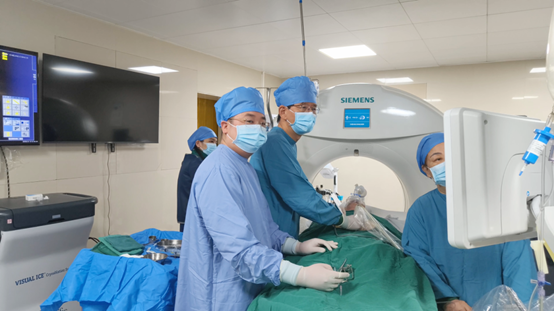
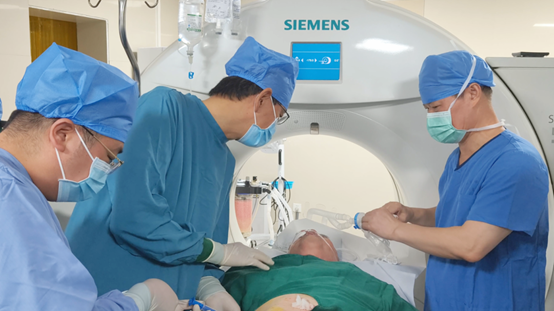
Recently, Dr. Niu Lizhi, President of Guangzhou Fuda Cancer Hospital, led his medical team to successfully perform a groundbreaking Nanoknife (Irreversible Electroporation, IRE) ablation on an 81-year-old male patient from Hong Kong. Under the dual guidance of CT and ultrasound, the procedure was smoothly completed under local anesthesia, using only a single needle (an integrated bipolar probe) percutaneously inserted into the pancreatic lesion with extreme precision.
The patient had been diagnosed with moderately differentiated pancreatic ductal adenocarcinoma in 2021. Despite undergoing a Whipple procedure and multiple cycles of chemotherapy, the cancer recurred. A hypoechoic retroperitoneal mass measuring approximately 7 cm had formed—irregular in shape and with poorly defined margins—which had already encased the celiac trunk and superior mesenteric artery, completely ruling out any chance of a second radical resection. In addition, due to his advanced age of over 80 and poor cardiopulmonary reserve, he was unable to tolerate general anesthesia.

Faced with this complex condition, the hospital's Multi-Disciplinary Team (MDT) held in-depth discussions and developed a personalized treatment plan:
Perform Nanoknife ablation on the recurrent pancreatic tumor to reduce tumor burden and prolong life;
Concurrently carry out a needle biopsy for pathological diagnosis and genetic testing to guide future treatments;
Combine with a celiac plexus block to relieve cancer pain, striving for a longer and higher-quality survival period for the patient.
The pancreas is situated in an intricate location, closely surrounded by critical organs, blood vessels, and the gastrointestinal tract. The highlight of this surgery was the application of next-generation IRE technology (S-IRE). Recently approved for clinical application in China, this domestically innovated technology marks a historic milestone in Nanoknife ablation for pancreatic tumors, with no relevant treatment cases yet reported internationally.
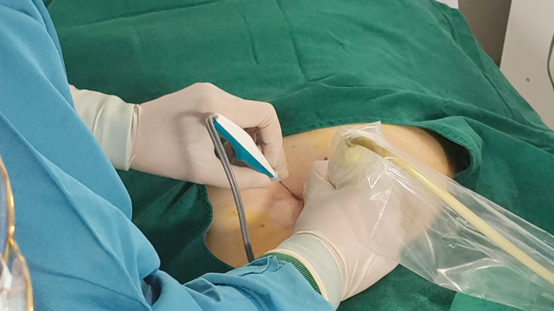
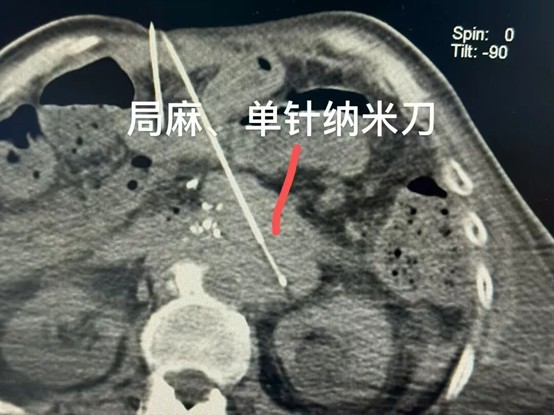
By inserting an ultra-fine, single-use pulse ablation electrode into the target area, it delivers wide-spectrum synergetic high-voltage pulsed electric fields to induce multiple micropores in cell membranes, triggering cell death. Unlike conventional Nanoknife systems—which require parallel alignment of multiple needles, complex puncture paths, and high technical difficulty—this technology features a single-needle bipolar design. A single needle completes the ablation, creating a clearer path, simplifying the procedure, and substantially reducing surgical risks.
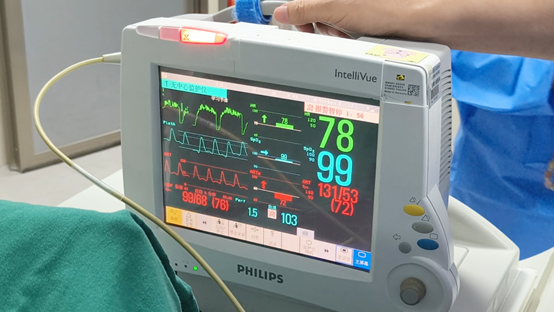
During the surgery, guided in real time by CT and ultrasound, President Niu accurately reached the lesion using just one integrated bipolar ablation probe, deftly bypassing adjacent vital structures such as the stomach, intestines, and blood vessels. Remarkably, the entire procedure was performed under local anesthesia, requiring no muscle relaxants or endotracheal intubation.
Because this single-needle bipolar Nanoknife does not generate high systemic currents, it avoids triggering muscle contractions and exerts minimal impact on electrocardiograms and hemodynamics. The patient remained fully conscious throughout the procedure, answered questions normally, experienced no notable muscle twitching, and maintained stable vital signs—completely overturning the traditional notion that Nanoknife ablation mandates general anesthesia and muscle paralysis.
The patient's post-operative recovery was remarkable: he was able to get out of bed the very next day without significant pain or discomfort. Follow-up CT scans demonstrated significant necrosis and shrinkage of the lesion. With the patient in high spirits, his family was deeply moved, expressing their heartfelt gratitude and taking commemorative photos with Dr. Niu. This touching moment not only reflects a warm doctor-patient bond but also epitomizes China's minimally invasive medical technology advancing from "following" to "running alongside" and now "leading" the field.
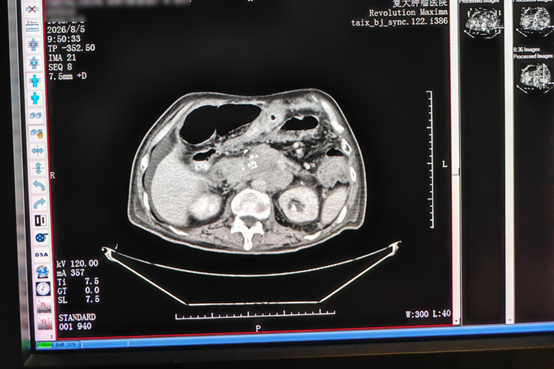
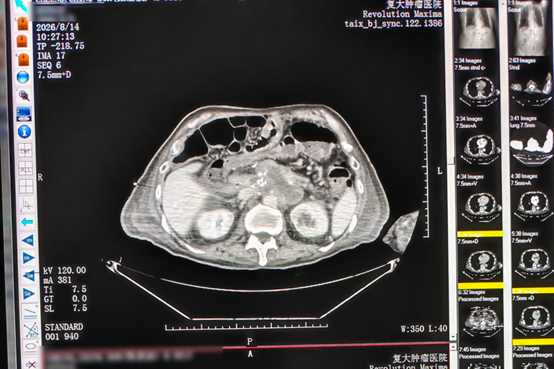
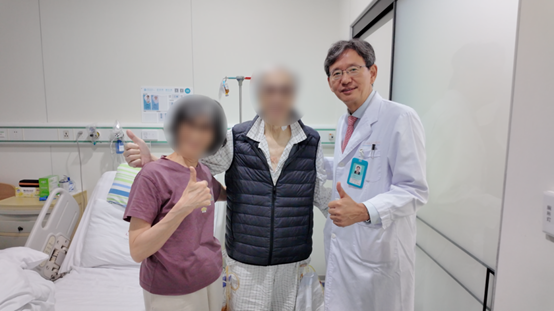
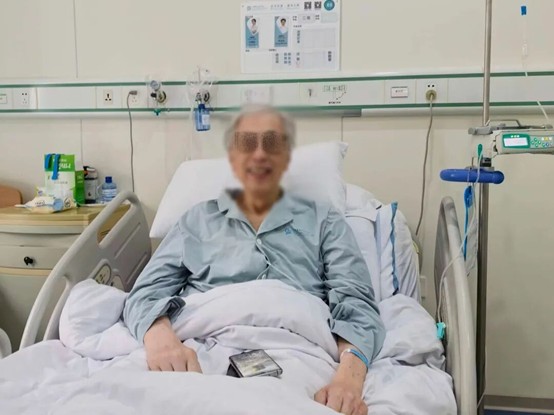
The successful implementation of this single-needle, local-anesthesia Nanoknife ablation is a major achievement born of Guangzhou Fuda Cancer Hospital's longstanding dedication to minimally invasive oncology. As a National Clinical Key Specialty (Oncology) hospital, Fuda continues to drive technological innovation and upgrades in precision ablation. The maturity and broader adoption of this technique offer a safe, effective, and accessible new option for elderly patients, those ineligible for general anesthesia, and those with inoperable pancreatic cancer—truly turning the "impossible" into "possible."