“Cancer itself is not the scariest thing — fear is.”
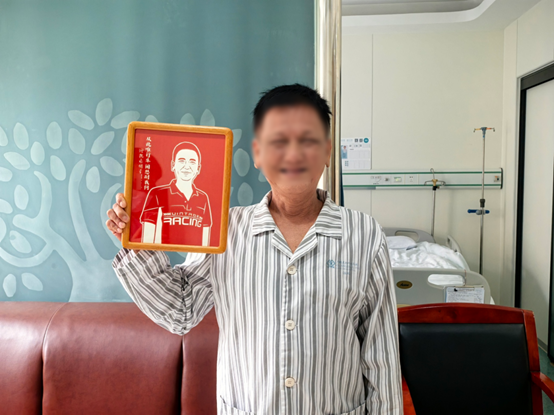
These words came from Uncle Liu, a Hakka Chinese from Malaysia. As a patient with nasopharyngeal cancer, he has spent the past 13 years fighting the disease. Today, his condition remains stable with regular follow-ups, and he continues to live a normal life.
It is hard to imagine that this 66-year-old man, who is still busy running his business and spending time with his grandson, once lay helplessly on the sofa, staring at the ceiling with tears streaming down his face.
Multiple Examinations Failed to Detect the Cancer
Uncle Liu worked in the electrical wire business. In his younger years, frequent social gatherings meant smoking and drinking became part of his daily routine.
At the end of 2012, he began noticing blood-streaked phlegm and occasional numbness in his face. He went to a local hospital for a nasopharyngoscopy, but the results showed nothing abnormal. Still uneasy, he continued regular check-ups, yet every report stated: “No obvious abnormalities detected.”
However, the blood in his sputum never disappeared.
In June 2013, a lump appeared on the right side of his neck. This time, doctors performed a biopsy, which confirmed nasopharyngeal cancer, stage IIB. The tumor measured approximately 4.5 × 2.7 × 2.4 cm and had already extended to the right oropharynx, with multiple lymph node metastases.
He could not understand it: Why had repeated nasopharyngoscopies failed to detect the cancer? And why was it already metastatic once discovered?
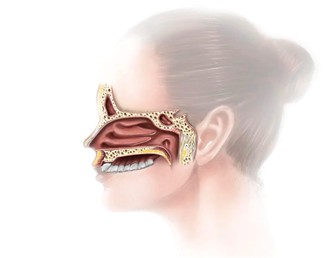
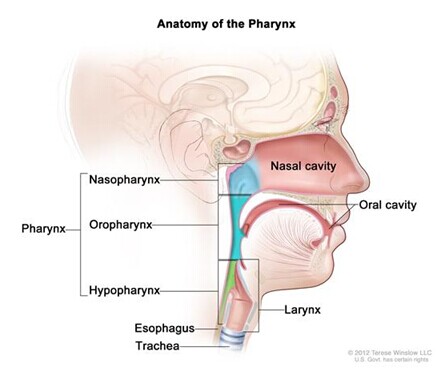
In fact, early-stage nasopharyngeal cancer may present only subtle mucosal changes without forming obvious masses. Due to the complex structure of the nasopharynx, some tumors can hide beneath the mucosa or within concealed areas such as the pharyngeal recess, making them difficult to detect through standard endoscopy alone. Imaging examinations like CT or MRI may help reveal abnormalities at an earlier stage.
Fear of Treatment — Until Fuda Changed His Mind
After receiving the diagnosis, Uncle Liu lay on the sofa, staring blankly at the ceiling as tears flowed uncontrollably. He kept asking himself: “I’ve never done anything bad in my life. Why did cancer happen to me?”
Local doctors recommended radiotherapy, but he refused.
It was not because he did not want treatment. He had once seen a friend undergo radiotherapy in Malaysia and was deeply traumatized by the side effects — the darkened skin around the neck and the inability to eat properly. The image stayed in his mind and filled him with fear.
Instead of radiotherapy, he first tried traditional Chinese medicine and later sought consultations in Singapore and Australia, but none of the proposed treatment plans made him feel truly reassured.
Then one day, while browsing in a bookstore, he came across a book introducing a hospital in China — Guangzhou Fuda Cancer Hospital. The book described treatment approaches different from traditional surgery, including minimally invasive therapies for cancer treatment.
At that moment, he became interested. But instead of making an impulsive decision, he chose to visit the hospital himself first.
Uncle Liu traveled to Guangzhou with his family. What he saw at Fuda was not only a modern medical environment, but also many international patients coming and going.
“So many people from overseas are willing to come here for treatment. There must be something special about this place,” he thought.
Feeling reassured, he returned home, arranged his business affairs, and officially came back to Fuda at the end of 2013, where he was admitted to the Third Department of Medical Oncology.
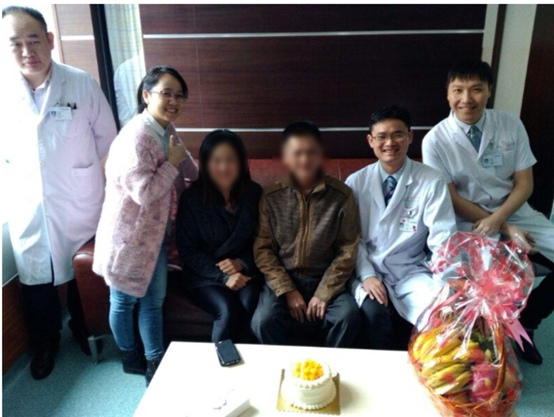
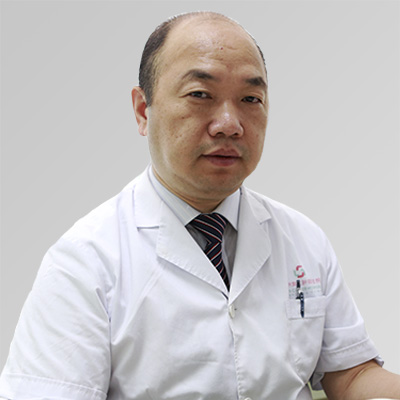
At that time, MRI results showed lesions in the right nasopharynx and parapharyngeal space, along with multiple metastatic lymph nodes in both sides of the neck, submandibular, and submental regions. Some lymph nodes had already developed central liquefactive necrosis. Director Xu Jiongyuan and his team developed a treatment plan combining chemotherapy and radiotherapy.
However, this was not traditional systemic chemotherapy. Instead, it was interventional chemotherapy — a minimally invasive technique in which chemotherapy drugs are delivered directly into the tumor-feeding arteries under imaging guidance through a catheter. In simple terms, it cuts off the tumor’s blood supply while delivering targeted treatment, improving local effectiveness and reducing systemic side effects.
During his first interventional procedure, Uncle Liu was extremely nervous. But afterward, he was pleasantly surprised. He experienced no obvious pain, no vomiting, and could still eat normally.
After three sessions of interventional chemotherapy, he underwent 30 sessions of intensity-modulated radiotherapy (IMRT) for nasopharyngeal cancer, completing the entire treatment course in April 2014.
Over the following years, every follow-up examination brought encouraging results: the disease remained well controlled, with no signs of recurrence.
Cancer Is Not the Enemy — Fear Is
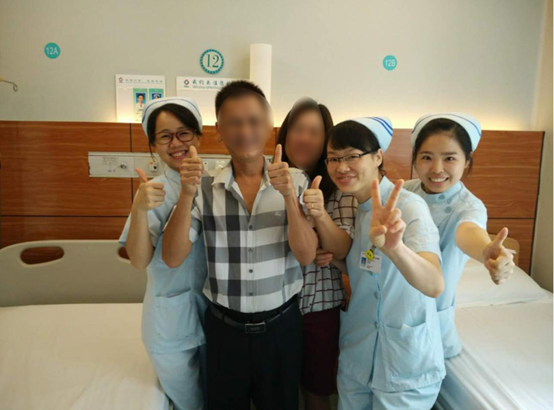
“The people here are very kind, very friendly, and very approachable.”
When talking about Fuda, Uncle Liu used the word “very” three times. In his view, the truly frightening thing about cancer is not the disease itself, but the constant fear and negativity from others — making patients believe there is no hope left.
Before treatment, he too had once been overwhelmed by fear. But after learning more about nasopharyngeal cancer and modern medical treatments, he gradually realized that cancer can be prevented, controlled, and treated. There is no need for excessive panic.
During the interview, he openly shared his personal “secret” to staying healthy and fighting cancer. It was not expensive supplements or mysterious practices, but simply one sentence:
“Stay optimistic and face it bravely.”
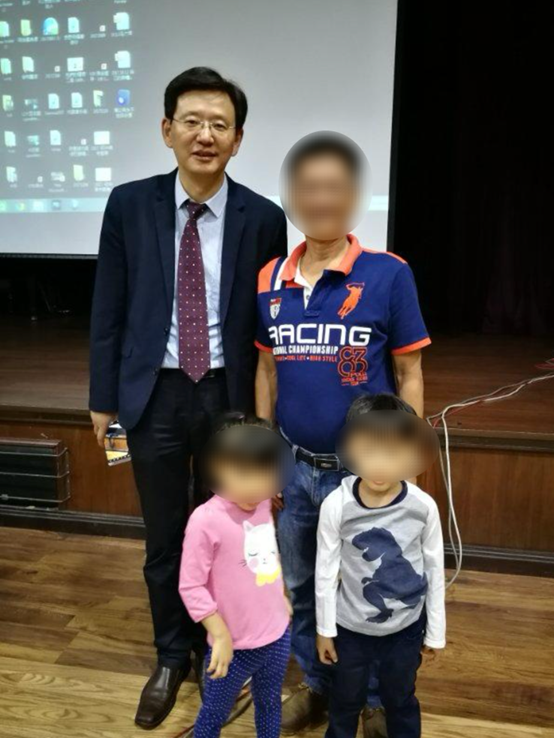
Today, at 66 years old, Uncle Liu still spends his days managing his electrical wire business. In his free time, he enjoys playing with his grandson.
He also has one heartfelt wish:
“I hope I can stay healthy and, when I turn 80, personally see my grandson enter university.”