Kate, an American in his early fifties, works in the internet industry. He exercised regularly and maintained a healthy diet. Before 2015, he had never seriously questioned his health.
Around 2014–2015, however, he began noticing an unusual sensation in his chest, particularly on the right side. When the discomfort persisted, he visited a local hospital for imaging studies. The report noted a "space-occupying lesion" in the right thoracic cavity.
Not fully understanding what that meant, and believing himself to be in good health, Kate chose to continue observation and follow-up examinations. It was only after a specialist warned him that "something wasn't right" that he finally underwent a needle biopsy. The diagnosis introduced a word that would change his life: thymoma.
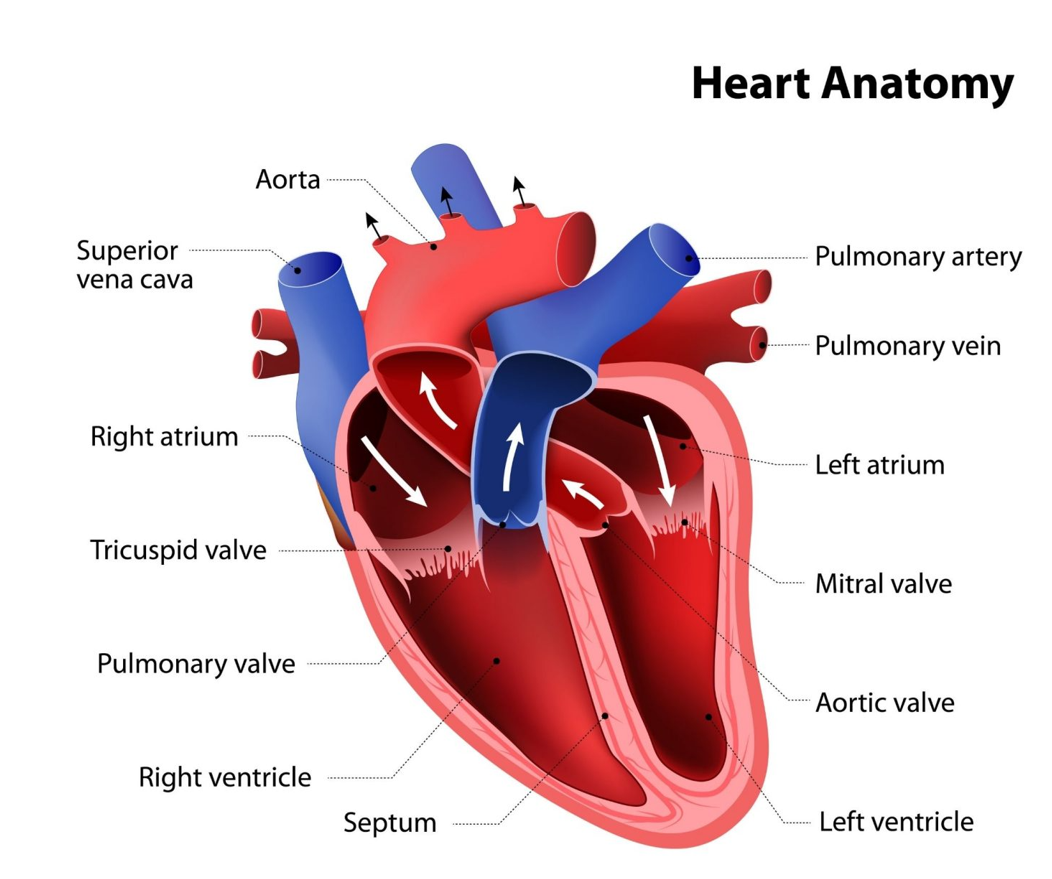
Thymoma is a rare tumor originating from thymic epithelial cells. Worldwide, its incidence is estimated at only 1.3–3.2 cases per million people annually. According to data from the SEER database in the United States, thymoma occurs more frequently among Black individuals and, particularly, Asian/Pacific Islanders than among White or Hispanic populations, suggesting a possible genetic component.
Unfortunately, Kate had won this rare and unwanted lottery.
His local medical team prescribed three cycles of neoadjuvant chemotherapy. Instead of shrinking, the tumor continued to grow. He then underwent 14 sessions of radiotherapy, which finally stabilized the disease.
In November 2018, Kate sought treatment from a leading thoracic surgeon in the United States and underwent resection of tumors in the right mediastinum and pleura.
The postoperative pathology report delivered grim news: invasive B3 thymoma (non-encapsulated), measuring 17 cm at its largest dimension, with invasion into mediastinal soft tissues, the pericardium, and lung tissue.
Yet what truly devastated him was another reality:
The surgery had not achieved complete tumor removal. Residual disease remained inside his body like a ticking time bomb.
The physical toll was only beginning to emerge. It took him two to three months to gradually return to work, and for the following years he endured persistent pain in his right chest and throughout much of his body.
In 2021, the "time bomb" exploded—the tumor recurred.
His local doctors recommended another round of chemotherapy. Kate refused. He did not want more chemotherapy, nor did he wish to undergo another surgery.
Over the next three to four years, he searched tirelessly for alternative treatment options. Yet most recommendations still led back to chemotherapy.
Then, by chance, he came across a video on social media.
In the video, a Chinese physician, Professor Niu Lizhi, was performing a procedure Kate had never seen before on a patient in their seventies with metastatic liver cancer: NanoKnife irreversible electroporation (IRE).
There was no large incision. No major organ removal. Yet the tumor was being treated.
Immediately intrigued, Kate enlisted the help of friends and began researching. They reviewed clinical studies, postoperative recovery data, and long-term follow-up reports. Like detectives, they thoroughly investigated Guangzhou Fuda Cancer Hospital and the technologies it offered.
His conclusion was simple:
"If a patient in their seventies can undergo this treatment, why can't I in my fifties?"
In mid-2025, Kate set foot in China for the first time and was admitted to the First Department of Medical Oncology at Guangzhou Fuda Cancer Hospital.
Comprehensive examinations soon revealed a challenging reality: recurrent thymoma with multiple metastases to the liver, lungs, and peritoneum.
The medical team recommended chemotherapy. However, Kate declined conventional systemic chemotherapy and chose interventional chemotherapy instead.
In this procedure, a catheter is guided directly into the artery supplying blood to the tumor, allowing chemotherapy drugs to be delivered at high concentrations directly to the cancerous tissue. Compared with traditional chemotherapy, interventional chemotherapy requires no major surgery and significantly reduces systemic side effects while maximizing drug concentration at the target site.
"My appetite improved. I slept better. I regained strength."
For the first time in years, Kate began to believe that what he had read in those studies was true.
Just as his condition was improving, another challenge emerged: Pure Red Cell Aplasia (PRCA).
One of the most distinctive clinical features of thymoma is its strong association with autoimmune dysfunction, which can lead to various paraneoplastic syndromes, including PRCA.
Even more concerning, PRCA may develop at the time of thymoma diagnosis, after treatment, or even years later. Studies have shown that approximately 23.8% of patients develop PRCA after surgery, with a median onset time of 36 months postoperatively.
In response, the medical team promptly organized multidisciplinary consultations and invited hematology specialists to participate in his care. Anti-tumor treatment was temporarily suspended while supportive therapies, including blood transfusions, were administered.
"One problem after another was addressed and managed."
Today, Kate's condition remains stable.
He has traveled between China and the United States multiple times. On every visit to Fuda, he has been touched by the patience of President Niu Lizhi, Director Shi Juanjuan, and the entire medical team. He also remembers the compassion shown by the nurses whose full names he may not even know.
In a handwritten letter of gratitude, Kate expressed his appreciation to the hospital staff.
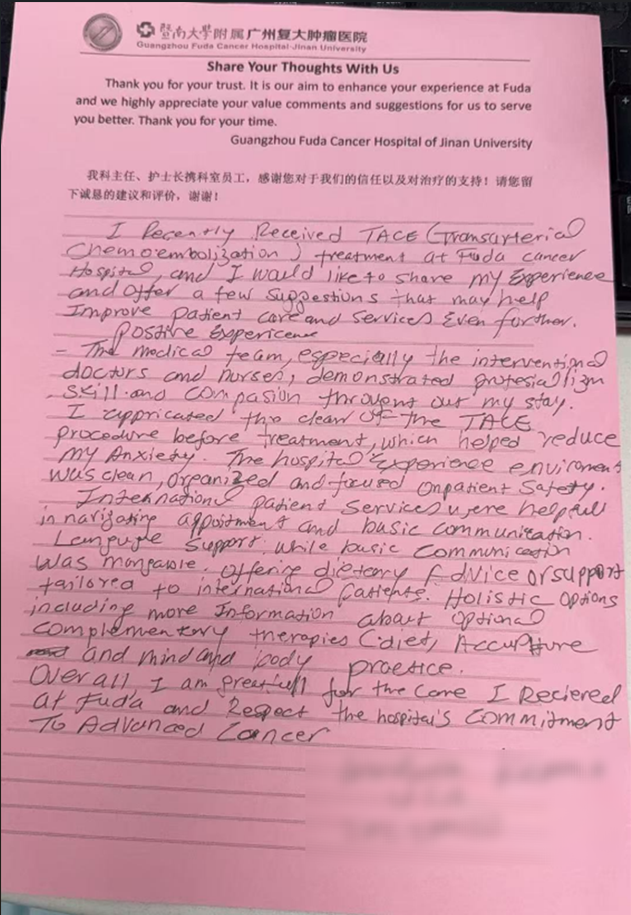
"Death is something everyone must eventually face," he says calmly but firmly. "But at this hospital, I found hope. I found options. I found a second chance at life."
Outside the hospital, life continues in all its bustle and motion.
And Kate's story is still being written.