"If my wife hadn't dragged me to get checked back then, there is no way I would have discovered this 'ticking time bomb' so early." For Mr. Xu, who hails from Hainan, his battle against sacrococcygeal chordoma has spanned over a decade.
It all began with faint, intermittent aches in his lumbosacral region. That was in 2015. Newly married, Mr. Xu assumed it was merely ordinary bone spurring and thought little of it. His wife, however, was exceptionally vigilant and insisted on taking him to the hospital. When the diagnosis—"Sacrococcygeal space-occupying lesion, roughly the size of an egg"—was laid in front of him, Mr. Xu felt his world collapse. Thoughts of divorce even crossed his mind; he didn't want to become a burden to their newly built family.
The local hospital recommended open surgery combined with chemotherapy, but the couple had not yet had children. Fearing it might affect his fertility, Mr. Xu opted for a different path: Traditional Chinese Medicine (TCM). He tried everything from hospital-prescribed herbal medicine to folk remedies, but the results were negligible. Later, they finally welcomed their child. However, with a young child and aging parents, undergoing surgery would have cut off the family’s primary source of income. Gritting his teeth, Mr. Xu had no choice but to delay treatment again and again. By 2022, the tumor had grown to the point where it compressed his bladder, making urination difficult. Still, he quietly underwent a cystostomy, lived with a urine bag, and continued taking herbal medicine. Despite trying numerous herbal formulas, nothing could suppress the wild growth of the tumor.
By the time the family’s financial situation finally improved and Mr. Xu gathered the courage for surgery, he was told: "It's too large and the risk is extremely high. Operating now will very likely cause paralysis." By March 2026, his tumor had expanded to about 25 × 20 cm. He suffered from leg numbness, could neither sit nor stand comfortably, and even lying down was pure agony. The local hospital dared not take his case and could only advise him to try his luck in top-tier cities like Beijing, Shanghai, or Guangzhou.
Initially, Mr. Xu sought help at several major hospitals in Guangzhou, but was shut out by immense crowds and endless queues for appointments. Unable to wait any longer, he stumbled upon Guangzhou Fuda Cancer Hospital. Through an online consultation, he received an initial diagnosis and treatment plan. After looking up extensive information, he discovered that Fuda's treatments primarily focus on minimally invasive techniques that cause little trauma and enable fast recovery. Although his family was skeptical and thought it seemed untrustworthy, Mr. Xu and his wife held onto it as their last lifeline: "Whatever happens, we have to treat a dead horse as if it were alive."
In April this year, Mr. Xu was admitted to the 6th Medical Ward at Fuda. By that time, he was suffering from anemia, malnutrition, elevated white blood cell counts, a urinary tract infection, and required support just to walk... The needle biopsy confirmed: (Sacrococcygeal) Chordoma.
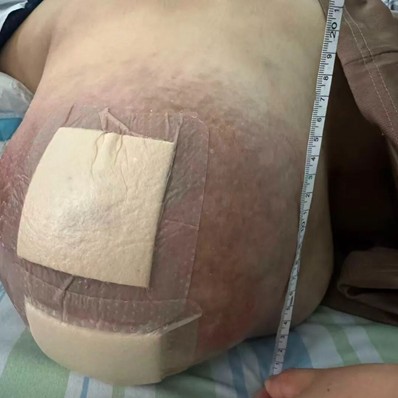
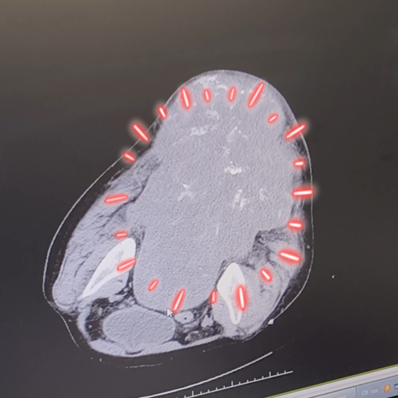
Chordoma, a rare bone cancer originating from remnants of the embryonic notochord, accounts for 1% to 4% of primary bone tumors. Highly aggressive, it embeds into bone tissue like tree roots, making complete surgical resection exceedingly difficult and leading to high recurrence rates. For a sacrococcygeal patient like Mr. Xu, where the tumor was enormous and invaded surrounding organs and nerves, surgery carried enormous risks. Coupled with tumor compression, urinary dysfunction, lower limb numbness, and excruciating pain, this relentless suffering broke his spirit far more than the disease itself.
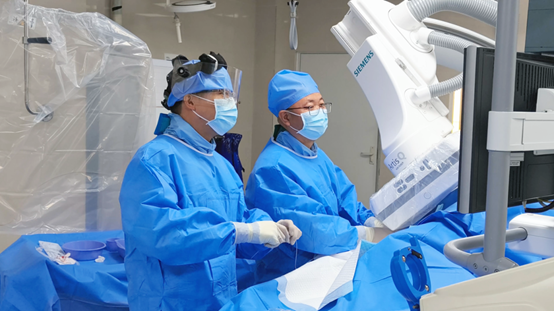
Director Li Hongmei and her multidisciplinary team quickly organized a comprehensive consultation and devised a meticulous combination strategy: first, stabilize abnormal health indicators; next, perform interventional embolization to precisely cut off the tumor’s primary blood supply and starve it; concurrently, combine this with targeted therapy to mount a multi-dimensional attack against the tumor.
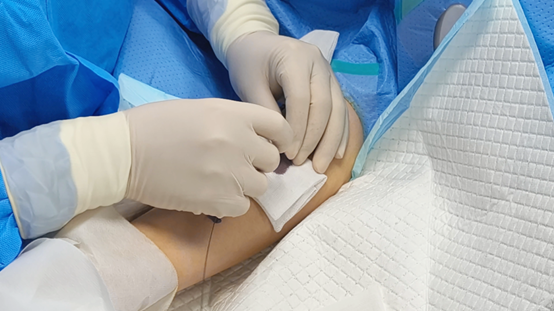
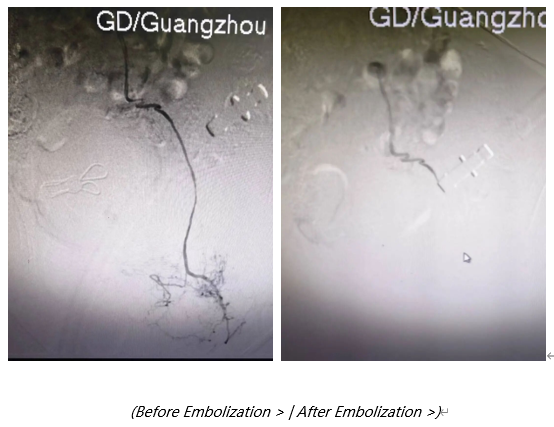
Course by course, Mr. Xu's body quietly responded in the best possible way: he could sit up, sleep on his side, urinate smoothly, and was able to stop taking painkillers. He gained 2.5 kg (5 lbs), and his mobility progressed from barely walking to covering 200 meters, then 2 to 3 kilometers. He was even able to ride a motorcycle again to take his wife shopping and strolling around. Imaging results also showed that the tumor was actively shrinking.
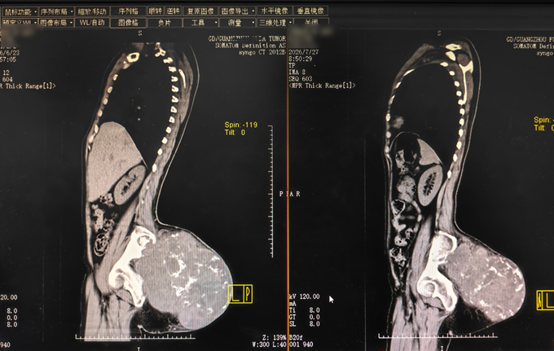
For Mr. Xu, a thousand words ultimately distilled into a simple yet heartfelt expression: Thank you. Thank you to his wife for dragging him to get checked in the first place, thank you to himself for never giving up, and thank you to everyone who held up his life during his darkest hours.