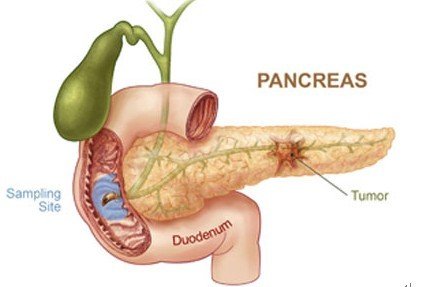
When pancreatic cancer is mentioned, words like "aggressive" and "short survival time" immediately come to mind. Yet few realize that it can quietly strike disguised as an ordinary stomach ailment. The experience of Ms. Leung from Hong Kong serves as a sobering reminder.
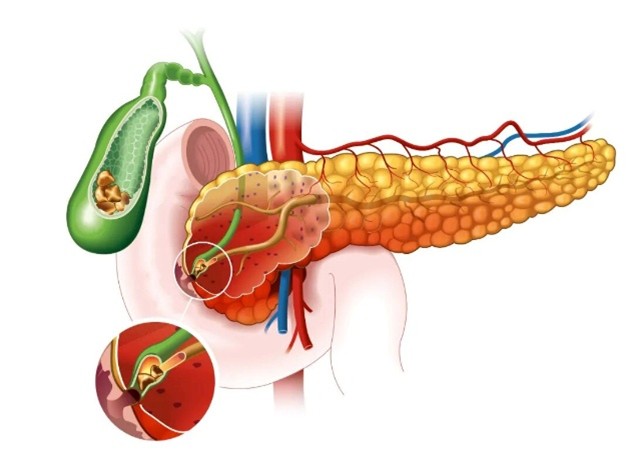
In July 2025, Ms. Leung first developed bloating and stomach pain, particularly noticeable after meals. Initially, she did not pay much attention to it, assuming some stomach medication would do the trick—after all, she had occasionally experienced similar discomfort in the past.
This time, however, was different. Despite taking medication for some time, her symptoms failed to improve. It was not until the whites of her eyes and her skin began turning yellow that Ms. Leung realized something was seriously wrong and sought medical care at a local hospital in Hong Kong. The test results came as a bolt from the blue: pancreatic cancer complicated by biliary obstruction and liver metastasis. The tumors were substantial—measuring 12 cm in the pancreatic tail, 6 cm in the pancreatic head, and up to 8 cm for the largest lesion in the liver.
Her immediate reaction was disbelief: Could there be a mistake in the test results? She ate regular meals, neither smoked nor drank alcohol, and at most stayed up late occasionally watching TV dramas. How could simple "post-meal discomfort" turn out to be pancreatic cancer with liver metastasis?
Why Does Pancreatic Cancer Easily "Disguise" Itself as a Stomach Ailment?
Tucked deep behind the stomach, the pancreas exhibits non-specific early symptoms—mostly abdominal pain, bloating, and belching—which are easily mistaken for common gastritis or indigestion. Clinically, approximately 60% to 80% of pancreatic cancer patients are initially misdiagnosed and treated for gastric disorders or ordinary cholecystitis.
Such misdiagnoses often cause patients to miss the critical window for treatment. However, compared with ordinary stomach conditions, pancreatic cancer presents distinct red flags worth noting:
· Pain caused by gastric diseases such as peptic ulcers or gastritis usually subsides after taking medication, whereas pain driven by pancreatic cancer is refractory to stomach medicine, persists continuously, and worsens progressively.
· Ordinary stomach ailments generally do not cause jaundice; clinical data indicate that roughly 90% of pancreatic cancer patients develop jaundice.
Inoperable Condition Nearly Led Her to Give Up Treatment
Doctors informed Ms. Leung that because the tumor had already metastasized, surgery was not an option, leaving systemic chemotherapy as the only path forward.
Ms. Leung, however, strongly resisted systemic chemotherapy. Having previously witnessed a relative with cancer suffer severely from the side effects of systemic chemotherapy, she initially felt reluctant to undergo treatment when told chemotherapy was her sole option.
Her family, nevertheless, refused to give up.
Around that time, a friend recommended Guangzhou Fuda Cancer Hospital. Rather than making a hasty decision, Ms. Leung and her family carefully researched Fuda's oncological technologies—specifically interventional therapy (a targeted local treatment rather than systemic chemotherapy) and the application of Irreversible Electroporation (Nanoknife ablation) for pancreatic cancer. After reviewing relevant clinical literature and media reports online, they decided to travel to Guangzhou Fuda Cancer Hospital to give it a try.
Personalized "Combination Therapy" Gradually Stabilizes Her Condition
In September 2025, accompanied by her family, Ms. Leung was admitted to Medical Department IV at Guangzhou Fuda Cancer Hospital. Upon admission, she was in poor physical condition, suffering from dizziness and fatigue. Moreover, due to tumor compression on the bile duct, her skin and eyes remained visibly jaundiced despite having previously undergone biliary stent placement in Hong Kong.
Given the extensive tumor burden in both her pancreas and liver, the medical team in Department IV formulated an individualized treatment plan: starting with interventional intra-arterial infusion chemotherapy to reduce tumor burden and prolong survival, combined with immunotherapy to activate an anti-tumor immune response.
After several cycles, both her pancreatic and liver tumors shrank and her condition stabilized. The medical team then performed Irreversible Electroporation (Nanoknife ablation) on the pancreatic and liver lesions. Utilizing high-voltage electrical pulses to induce tumor cell apoptosis, Nanoknife is a "non-thermal ablation" modality that causes minimal collateral damage to adjacent critical structures such as blood vessels, bile ducts, and nerves, making it particularly suitable for unresectable locally advanced pancreatic cancer.
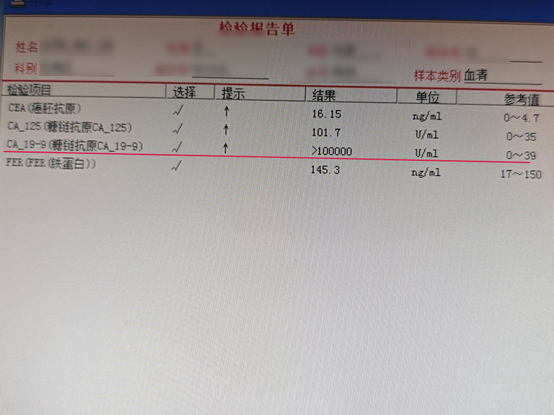
"I had heard about the reputation of Nanoknife back in Hong Kong, too, but the mainland has much richer case volume and clinical experience. Fortunately, I made the right choice," Ms. Leung shared. Thanks to the coordinated "combination punch" of interventional therapy, immunotherapy, Nanoknife ablation, and targeted therapy, her pancreatic and liver lesions decreased in size and metabolic activity, her tumor marker CA 19-9 levels dropped markedly (from >100,000 U/ml down to 102.2 U/ml), and her disease achieved stability.
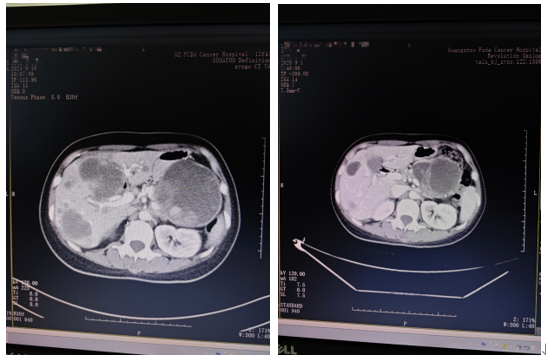
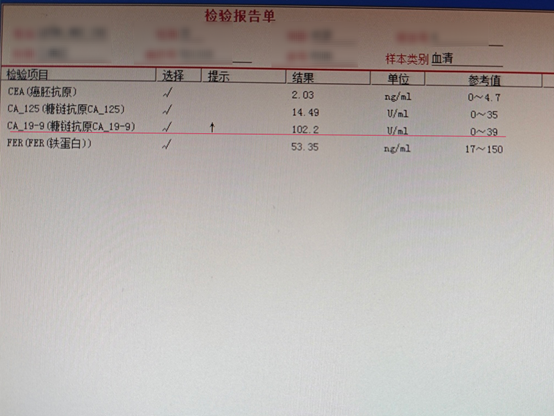
Since her diagnosis, Ms. Leung has been on medical leave to focus fully on her recovery. Whereas cancer once robbed her of her appetite and left her dizzy and exhausted after just a few steps, she now feels dramatically better.
"Now I can even go out for walks and go shopping on my own," she said.
From "post-meal bloating" to a diagnosis of metastatic pancreatic cancer, and eventually achieving steady disease control step by step, Ms. Leung’s journey is both moving and a vital warning: never dismiss persistent, unrelieved "stomach trouble" as a minor gastric issue. Especially when warning signs such as jaundice or progressively worsening pain appear, prompt medical evaluation is essential to uncover the underlying cause.